

Aerial view of a battery energy storage installation
Built for Data CentersMicrogridsBattery Storage

Power Your Data Center Without the Grid Strain

Data centers are the fastest-growing load on the local grid, and neighbors notice. An Opt4Grid microgrid takes the burst, shaves the peaks and backs up critical loads, so you grow capacity, cut energy costs and become the good neighbor.

Buffer
Trickle In, Hold the Burst
Less strain on a weak feeder
Peak Shaving
35% to 90% Scenarios
Tariff-dependent demand reduction
Community
A Better Neighbor
Less grid strain, cleaner power, better PR
Why Data Centers

The Grid Is the New Bottleneck Be Part of the Solution

New capacity waits on utility upgrades, demand charges punish every spike, and communities push back on facilities that drain the local grid. A microgrid answers all three.

01

Grow Without Waiting

Add load on the service you already have, instead of waiting on a new feeder.

02

Cut the Demand Bill

Stored energy covers the peaks that set your monthly demand charges.

03

Stay Up

Critical loads ride on storage, alongside your existing UPS and backup.

04

Be the Good Neighbor

Less strain on the shared grid, cleaner power and a story your community gets behind.

How It Works & What You Save

Take the Burst Shave the Peak

Storage absorbs the spikes from servers and cooling, so the grid sees a calm, steady load. The battery covers the peaks that drive your monthly bill.

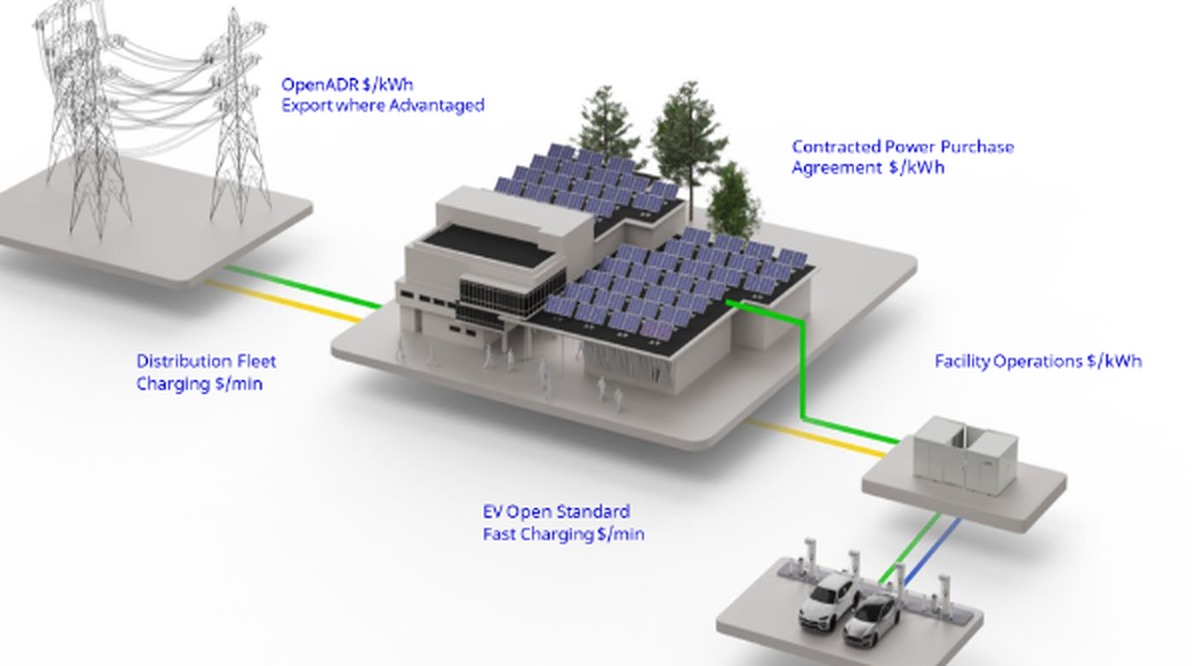
Microgrid diagram: utility, solar, storage and charging on one system
01

Trickle In

Storage recharges slowly from your existing service.

02

Hold the Burst

Battery modules stand ready for spikes, peaks and outages.

03

Discharge on Demand

Power goes to IT, cooling or critical loads exactly when needed. If storage runs empty, the site simply returns to grid power.

How Fast a 440 kWh Hub Refills From Empty
50 kW8.8 hrs
100 kW4.4 hrs
150 kW2.9 hrs
200 kW2.2 hrs
600 kW0.7 hrs

Published module math, for illustration. Your configuration is confirmed in design.

Lower Bill & Value

Lower the Monthly Bill, Help the Local Grid

Your Building’s Load vs What the Grid Sees
Off-peak
Ramp
Peak
Hold
Later
Building loadWhat the grid sees

Illustrative. Savings depend on your tariff and load, and are confirmed by site-specific modeling. Biggest impact in high demand-charge markets like CA, NY and PJM.

Where the Savings & Revenue Come From
  • Demand charges. Software discharges storage on the intervals that set your bill, then recharges off-peak
  • Stored solar. Use on-site solar at peak rates instead of buying from the grid
  • Grid programs. Approved export and demand-response programs
  • Power purchase. Contracted PPA, $/kWh
  • Charging. Fleet and public EV fast charging on the same system
Community & PR

Strengthening the Neighborhood Grid The Data Center Your Community Wants

Approvals, expansions and local relationships increasingly depend on how a data center affects the grid around it. A microgrid lets you show, not just say, that you add strength instead of strain.

Grid Relief

Off the Local Peak

Your facility stays off the peak, right when homes and businesses need the grid most.

Cleaner Power

Store Solar, Use It Later

Less reliance on fossil peaker plants when demand is highest.

Smoother Approvals

Easier Conversations

Utilities, planners and local officials respond better to projects that reduce grid impact.

Better PR

A Story Worth Telling

Cleaner power, a calmer grid, local trades and a facility that plans ahead.

Sized to Your Data Center

Edge to Campus The Right Fit

Pick the closest match. Opt4 works with your team to size storage to your actual IT load.

Small commercial building
Local / Edge Data Center

Buffer + Peak Shaving

A dedicated suite, small building or modular install. Targets short peaks and selected critical loads.

  • Storage: 2 to 4 hub modules (880 to 1,760 kWh)
  • Recharge: 75 to 150 kW from existing service
  • Peak reduction scenario: 35% to 60%
Multi-story commercial tower
Multi-Story Leased Space

Buffer + Peak Shaving

Selected floors in a commercial tower, subject to conversion feasibility. Storage sized to the floors in use.

  • Storage: 4 to 8 hub modules (1.76 to 3.52 MWh)
  • Recharge: 150 to 300 kW from existing service
  • Peak reduction scenario: 50% to 75%
Mall-scale commercial property
Mall-Scale Property

Phased Storage

A former mall or large commercial property with room for phased reuse. Storage grows with confirmed load.

  • Storage: 8 to 20 hub modules (3.52 to 8.8 MWh)
  • Recharge: 300 to 600 kW from existing service
  • Peak reduction scenario: 60% to 90%

Illustrative configurations using 440 kWh modules, not engineered packages. Peak reduction depends on your tariff. IT capacity excludes cooling and losses. All figures confirmed site by site.